BCUBE · Vorwerk
Reworking a video with AI
What if the camera is no longer the final image, but just the beginning? We tested a new production workflow: shooting on a smartphone, then rebuilding the footage from the ground up with AI. The result proved something we strongly believe in: AI works best when it adds to human creativity, not when it replaces it.
RELATED WORK
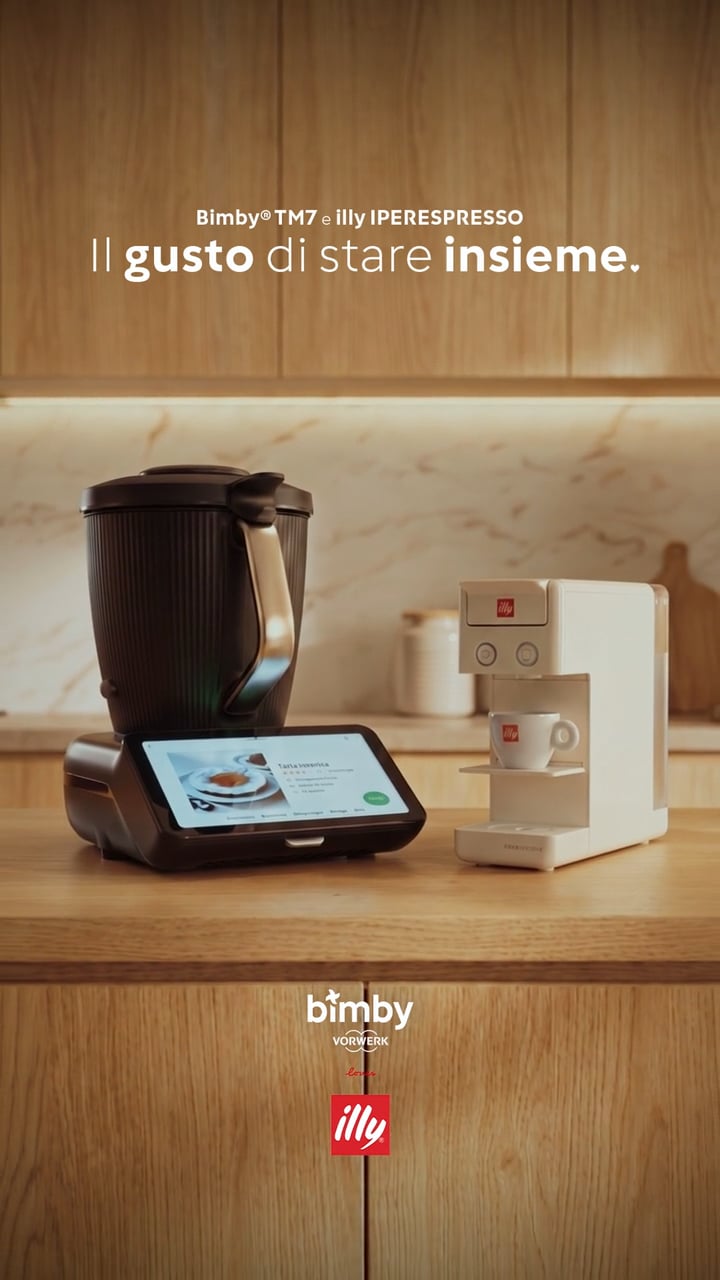
watch the projectFrom Smartphone to AI: Rethinking the Production Workflow
A different way of producing. A new role for AI.
We recently decided to approach a production in a fundamentally different way.
Instead of starting from a conventional production pipeline — camera, lighting, crew, set, shoot, post — we started with something much simpler: a smartphone.
The result was not intended to look like smartphone footage.
It was the starting point.
A different kind of workflow
We shot the initial material with a smartphone, focusing on performance, framing, movement and atmosphere rather than trying to achieve a finished visual straight out of camera.
From there, we rebuilt the images using AI from the ground up.
The original footage became a creative and structural reference: a way of defining what was happening in the frame, how the subject moved, how the camera behaved and what the scene needed to communicate.
AI then became part of the production process itself — not simply a tool for cleaning up or generating a few assets, but a new layer through which the entire visual language could be developed.
Shoot → reinterpret → rebuild → refine.
And it worked.
The result
The final output successfully achieved the visual ambition of the project while allowing us to work with a production model that was faster, more flexible and fundamentally different from a traditional shoot.
What matters to us, however, is not simply that AI made the process possible.
It is how we used it.
We still relied on the same things that make a production work: direction, cinematography, visual research, composition, editing, taste, storytelling and an understanding of how an image actually communicates.
AI didn't replace those skills.
It amplified them.
AI as an addition, not a subtraction
This is the approach we believe in.
AI should integrate into the creative process, never substitute it.
There is a temptation to look at generative AI as a way of removing steps: fewer people, less equipment, less shooting, less knowledge.
We see it differently.
The real opportunity is to add a new layer of possibility to the knowledge we already have.
A director should still know how to direct.
A cinematographer should still understand light.
A production company should still know how to build a set, manage a shoot and solve problems.
The difference is that we now have another tool capable of transforming those decisions into something that would have been difficult — or impossible — to achieve through a conventional workflow alone.
The future is hybrid
We don't think the future of production is AI instead of production.
We think it is production + AI.
Sometimes that might mean a traditional camera and a completely conventional shoot.
Sometimes it might mean a smartphone as the capture device and AI as the medium through which the final image is created.
Sometimes it will be something in between.
The important part is not choosing between human creativity and technology.
It is understanding where technology can make human creativity more powerful.
This project was a complete success for us precisely because it demonstrated that a different workflow doesn't have to mean less craft.
It can mean more creative control, more possibilities, and a new way of thinking about what a production can be.
And this is a direction we intend to keep exploring.
like what you see?
Tell us about your project — let's make something juicy together.